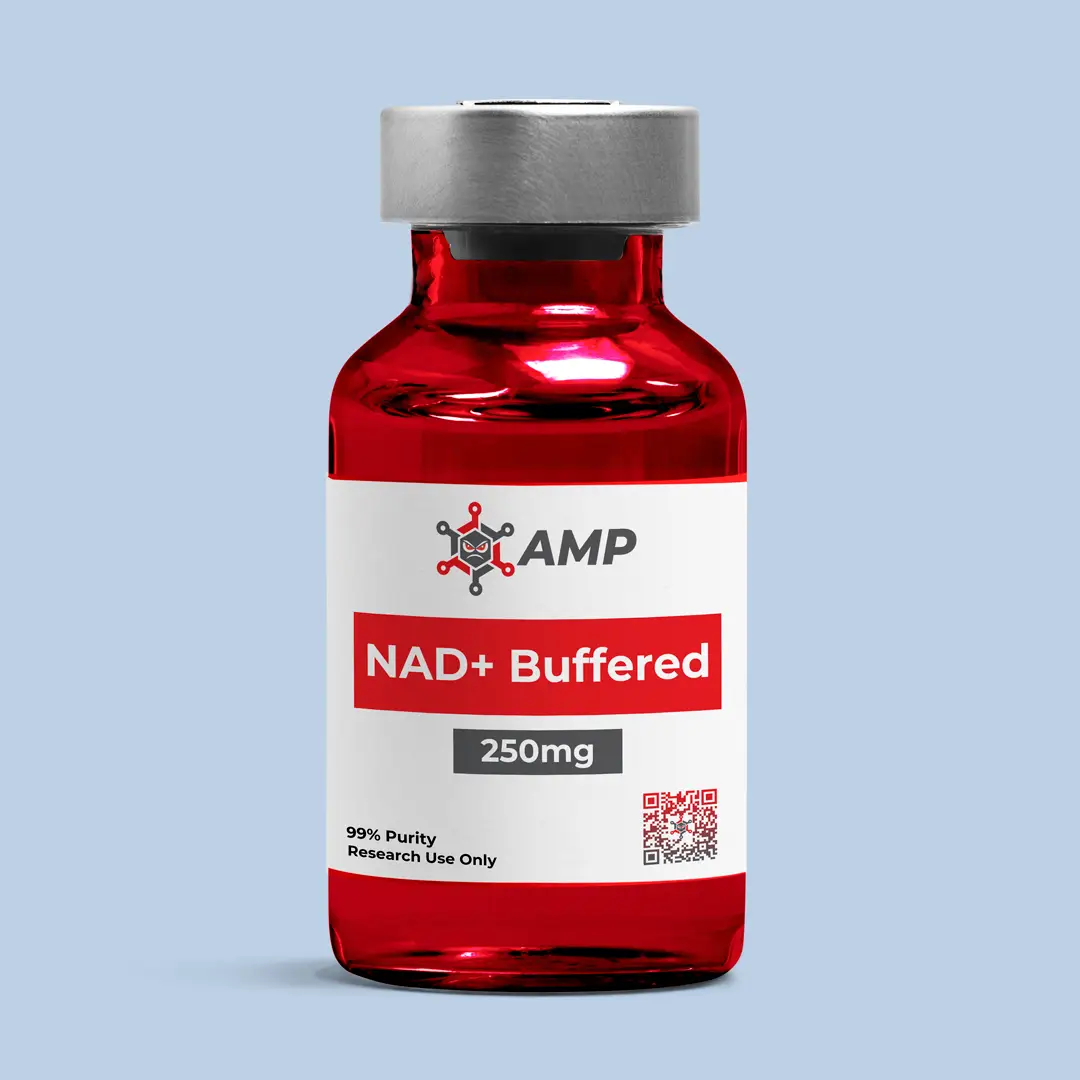
NAD+ 250mg High-Grade Peptides Buffered
NAD+ 250mg Buffered high-grade peptides contains nicotinamide adenine dinucleotide (NAD+), a key coenzyme that plays an important role in how cells make energy in chemical reactions that involve electrons in the functions of the mitochondria and in signals that enzymes send inside the cell.
NAD+ is often studied in research because of the important part it plays in how cells produce energy in processes that involve DNA and in keeping the cell in balance.
This NAD+ 250 mg Buffered high-grade peptide that is for research is provided as a powder that has been freeze-dried. It has a purity level of at least 99 percent. This makes it a good choice for experiments that takes place in a lab under controlling the conditions.
- NAD+ 250mg Product Specifications
- Compound: Nicotinamide Adenine Dinucleotide (NAD+)
- Quantity: 250mg in each
- Form: Freeze-dried powder
- Purity: At least 99%
- Storage: Should keep at -20°C
- Intended use: For scientific and lab research
High-grade NAD+ buffers must have always been in use and store by researchers in accordance with the specifications of each experiment as well as the proper laboratory protocols.
NAD+ 250mg Buffered high-grade peptides is meant for research and lab work. It is not for people to take, to inject, to use as a supplement, or to give to animals.
For scientists who need NAD+ 250 mg research-grade NAD+ or freeze-dried NAD+ powder, this product offers a described material that can be used in experiments that are carefully set up.
What’s the use of NAD+ 250 mg?
NAD+ 250mg is a research compound used in a laboratory studies to understand how cells produce energy and maintain normal cellular functions.
Researchers may use NAD+ 250mg Buffered high-grade peptides and NAD+ 500 mg to study:
- Cellular energy: Understanding how cells convert nutrients into usable energy.
- Mitochondrial function: Studying how mitochondria support energy production.
- Redox reactions: Examining how cells manage oxidation and reduction processes.
- Enzyme activity: Investigating enzymes that use NAD+ during biochemical reactions.
- Cellular aging research: Exploring how NAD+ levels are related to changes in cells over time.
- Metabolic research: Studying how cells process nutrients and regulate metabolism.
- Cellular stress: Investigating how cells respond to different forms of metabolic or environmental stress.
Benefits of NAD+ 250mg Buffered high-grade peptides.
Maintaining or restoring NAD levels has been associated with greater mitochondrial function, increased cellular repair capacity. The higher tolerance to metabolic stress in preclinical and early translational research. According to research on animals.
Increasing NAD may enhance resilience in disease models, especially when mitochondrial function is compromised, support some aspects of healthy aging, and encourage tissue repair following injury. Additionally, NAD helps to the regulation of inflammation and neuroprotective activities, as well as the maintenance of cellular homeostasis in many tissues.
Mechanism of Action
NAD (nicotinamide adenine dinucleotide) is a central metabolic coenzyme that alternates between oxidized (NAD⁺) and reduced (NADH) states. It plays a key role in redox reactions across glycolysis, the tricarboxylic acid cycle (TCA), and oxidative phosphorylation.
Beyond energy metabolism, NAD⁺ 250 mg Buffered high-grade peptides serve as a substrate for enzymes like sirtuins, PARPs, and CD38, which regulate DNA repair, epigenetic signaling, and stress responses.
Therefore, NAD levels decline with age, metabolic stress, and disease; supplementing or restoring NAD pools is a major target in research on longevity, mitochondrial health, and metabolic resilience.